MA, MBChB (Edin), MD (Edin, Distinction), FRCS (Gen. Surg, Edin), FACS
Robotic-assisted Surgery
Clear information for patients
Robotic surgery is also called robotic-assisted surgery. This page explains what it is, who it is for, and what to expect before and after your operation.
About robot-assisted surgery
Robotic (da Vinci) surgery is a minimally invasive keyhole technique that allows the surgeon to operate through small incisions using an advanced robotic system. In robotic-assisted surgery, the surgeon controls the robotic instruments to perform the procedure with enhanced precision, flexibility, and control.
This technology enables the surgeon to perform very precise movements and carry out procedures ranging from simple to more complex operations while using small cuts.
The da Vinci surgical system uses robotic arms that hold specialised surgical instruments to assist the surgeon during the procedure. One robotic arm carries a high-definition 3D camera that provides a stable, magnified view of the surgical area.
Using hand controllers at the console, the surgeon precisely moves the other robotic arms and their instruments to perform each step of the operation. Importantly, the robotic system does not replace the surgeon — every movement of the robot is fully controlled by the operating surgeon.
In traditional laparoscopic surgery, the surgeon holds the tools in their own hands whilst in robot-assisted surgery, the tools are attached to the robot with full tremor-free control by the surgeon.
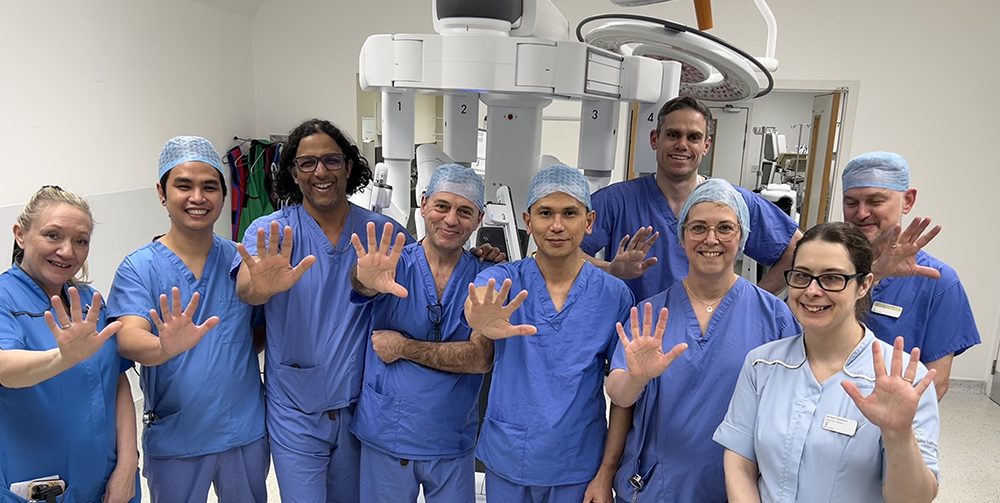
About robotic-assisted surgery by Mr Liau
- Expert in robotic and laparoscopic HPB surgery
- Focus on day-case pathways where appropriate
- Personalised, patient-centred surgical care
Mr Liau is a Consultant hepatopancreatobiliary (HPB) surgeon based in Cambridge, specialising in robotic-assisted procedures involving the liver, pancreas, and gallbladder. He is recognised as one of the most experienced high-volume robotic surgeons in the East of England.
He played a leading role in establishing the multispecialty robotic surgery programme at Addenbrooke’s Hospital in Cambridge, as well as developing robotic surgery services in the private sector at Spire Cambridge Lea Hospital. Mr Liau currently chairs the Robotic Surgery Medical Advisory Committee at Spire Cambridge Lea Hospital, which houses the first da Vinci robotic surgery system in the private sector in
the East of England.
— Mr S Liau
Spire Healthcare Press Releases (2026)
Mr Liau has helped set up the multispecialty robotic surgical service, the first of its kind, in the East of England private hospitals. This has provided the option of state-of-the-art robotic assisted surgery for private patients in this region. The safety of the robotic surgical programme is paramount, and together with the Spire team, Mr Liau has introduced and trained surgical and peri-operative staff members to ensure the technology is adopted safely and effectively.
Spire Cambridge Lea Hospital
Spire Healthcare Group plc
What does robotic surgery (specifically robotic-assisted cholecystectomy) involve?
Mr Liau uses the da Vinci robotic surgical platform to perform robotic-assisted gallbladder removal (robotic cholecystectomy). This technology brings an advanced level of precision and control to keyhole gallbladder surgery.
With extensive experience performing a high volume of these procedures, Mr Liau uses the da Vinci robot to treat a wide range of gallbladder conditions. This includes cases of moderate complexity, while still maintaining a minimally invasive keyhole surgical approach.
Precision of robotic surgery
Mr Liau’s private practice – focused expertise in gallbladder surgery
Compared to traditional open surgery:
Smaller cuts
Precision & control
Faster return to life
Compared to laparoscopic surgery:
Less pain
Lower risk of open surgery
Advantages to the surgeon & patient
Risks & considerations
TRUSTED EXPERT SURGICAL CARE, DELIVERED QUICKLY AND RELIABLY
Your robotic-assisted surgery journey
STEP 1
Consultation
STEP 2
Before your surgery
STEP 3
Day of surgery
STEP 4
Recovery
Frequently asked questions about robotic surgery
Is the robot operating on its own?
Is robotic surgery safe?
Do surgeons need specialized training to do robot-assisted surgery?
Yes. Surgeons must undergo additional structured, stepwise training before they are able to perform robotic surgery safely. Mr Liau has completed extensive training in this field, including training visits to the Netherlands, Belgium, South Korea and Canada.
Will I have scars and will it be painful?
How long will I stay in hospital?
For robotic-assisted cholecystectomy, most patients are able to return home on the same day as their surgery. Patients can usually get out of bed once they have recovered from the anaesthesia and are able to resume eating within a few hours after the procedure.
Before discharge, the ward nursing staff will provide you with instructions for care at home. Please refer to the ‘Guide to Recovering from Gallbladder Surgery’ for more information.
Can every operation be performed robotically?
Mr. Liau works with all the leading health insurance providers:
